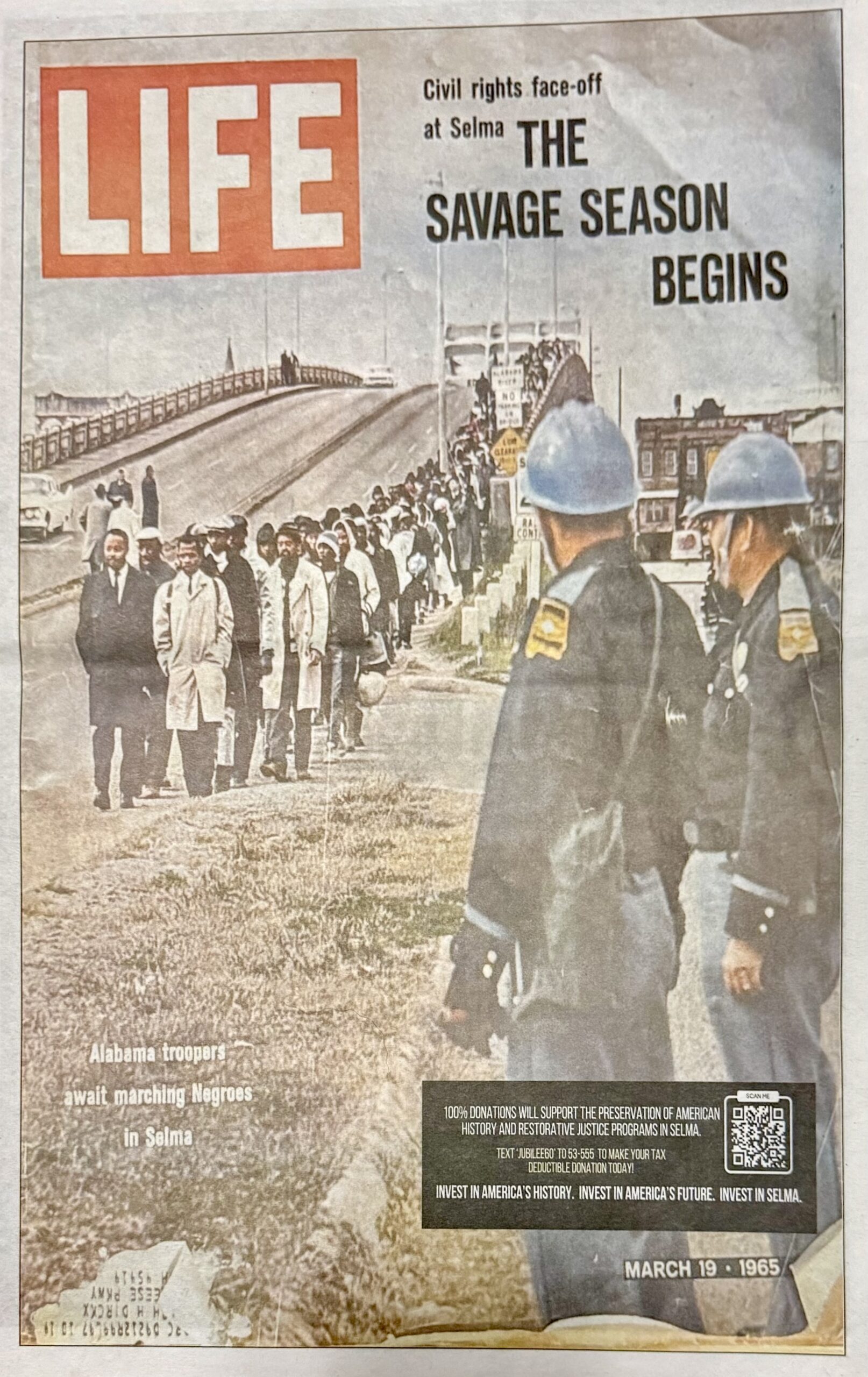
There isn’t a museum or interpretive site that does not use video. They all use still images as well, frequently as a backdrop or wallpaper to highlight, comment, or expand upon the display, image, or video. The orienting video at the Civil Rights Museum, established by the Southern Poverty Law Center in Montgomery, Alabama, where the Maya Lin monument stands, plays against a wall with black and white still images. The video design is sophisticated, sometimes playing in the sandwich board carried by a young girl. The Legacy Museum annotates the background images along with the curatorial information that focuses on the display.
Projection and interactive screens have changed the role of video. Most of the museums are in a hushed light, almost church-like, where displays and screens sparkle. The smaller museums still rely on placards and large printed stories, but the larger ones are all screens, movement, and light emanating from rather than falling upon. For focused viewing, almost all the sites have small theaters, often with timers outside indicating when the next showing will start or staff, like a nightclub bouncer, informing visitors of the start of the next loop.
The Vietnam War often has the moniker, “Living Room War”, applied to it because it was the first televised war via the three broadcast networks that controlled Americans’ nightly viewership. World War II had its video shorts in the theaters, but Vietnam had nightly reports in the living room. However, both the Vietnam War and the Civil Rights movement had searing still images and magazines to distribute them.
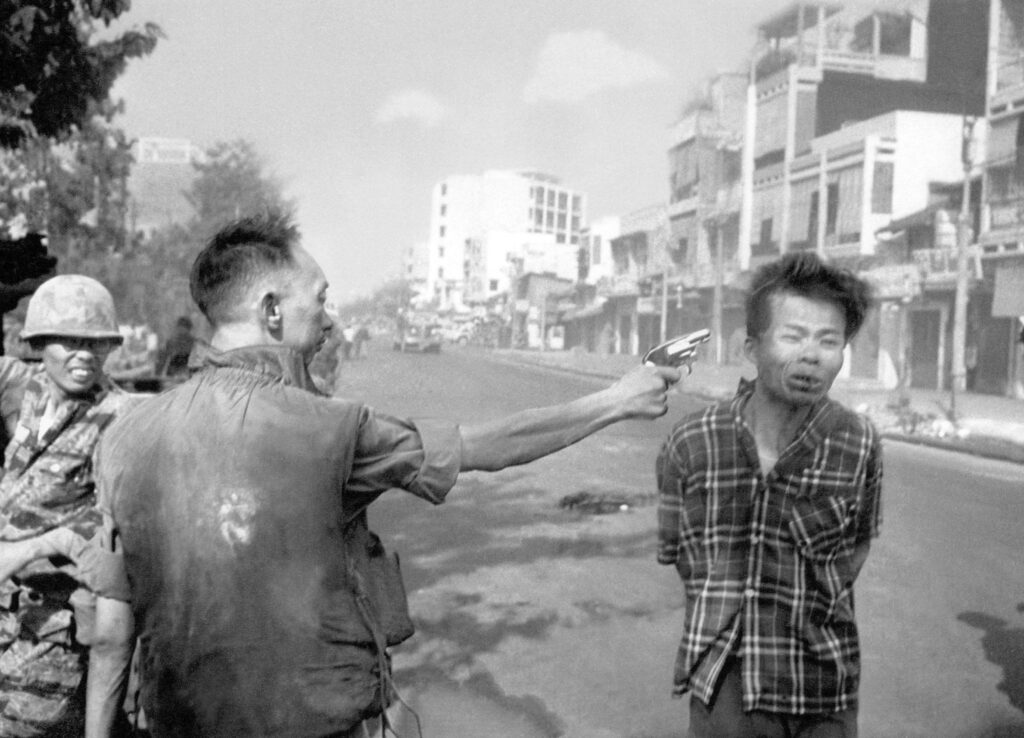
Life magazine arrived in the mail on either Thursday or Friday, until 1972. Its glossy cover image fronted the newsstands, so its cover image was seen again and again by subscribers and those passing by. The magazine hung around. Any doctor’s office or waiting room had at least last week’s edition. The barbershop usually had more ratty, thumbed-through copies dating back a month or more. The images could be color, like those of Larry Burrows, or stark black and white like Eddie Adam’s 1968 Saigon Execution of Nguyen Ngoc Long shooting Nguyen Van Lem on a Saigon street or Nick Ut’s The Terror of War show Ming Phan Thį Kim Phúc, the naked girl running in the center of the road after a napalm attack.
.
These iconic images of the war show up again and again. We can linger on them. We can speculate on the emotions of the participants by their stance or gesture. Single images are not unusual. A flattering portrait of Anne of Cleves caused Henry VIII to marry her. Géricault’s The Raft of the Medusa broke French politics. Picasso’s Guernica rattled the world. And the black press, Jet and Ebony, publishing Emmett Till’s battered face, galvanized the early Civil Rights.
I am not particularly attuned to personal video or how a generation that can now access and carry video with them for viewing at any time. I am an interloper. There seem to be two aspects that cause me to stumble: first, I must view the video. Call it up on a device. I don’t feel I come upon it— in a freshly printed magazine, in a poster that appropriates the image, in a tattered throwaway on the subway or city street. Video is not part of my natural landscape. I will sometimes see the same clip repeated again and again on television reports, on a screen above a bar at an airport, on a Jumbotron at a public square. That video clip will usually disappear after its cycle of a day or two. But it won’t show up on the gas pump screen next week or next month. Second, I throw up control for contemplation to the time tick of the frame rate. The moment I pause, I am looking at a still image. Does that convey the whole? When I run back in time, am I checking what I saw or looking for nuance? I wonder if video during the Vietnam War was accumulation. Just nightly viewing of the same horror again and again and again. Not the single image, like the recently removed “Peter” from a National Park Display.
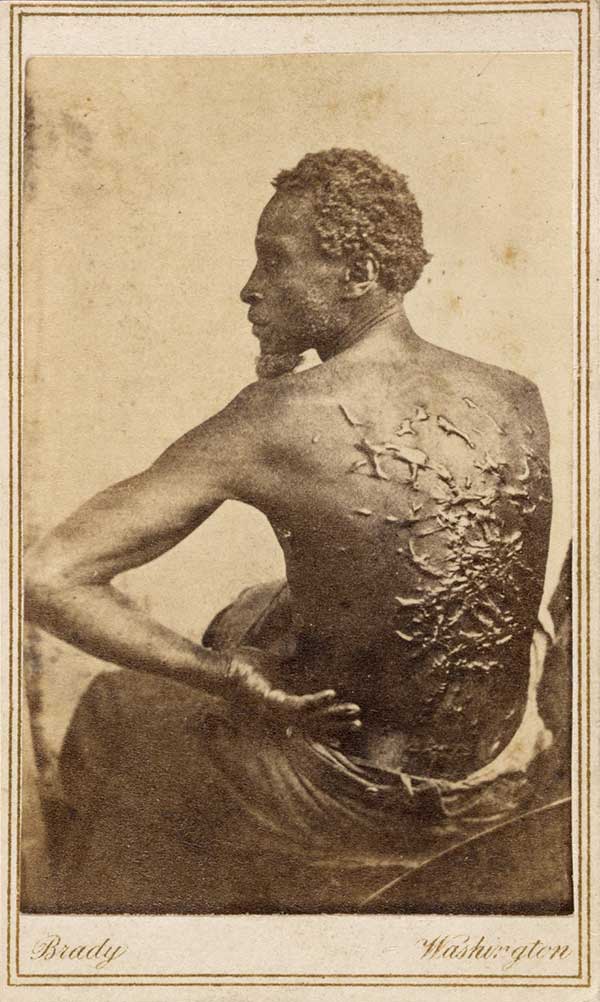
In checking more contemporary images that have moved people. For 9/11, the purported iconic image is of firemen raising a flag at Ground Zero. For the Iraq war, maybe pulling down the Saddam statue or the combat soldier lounging in a golden chair in the former palace. Or is it the images taken by soldiers, not press or professional photographers, of the abuse of prisoners at Abu Ghraib? Then there is Shepard Fairey’s “Hope” poster of Obama that moved a nation and more recently, Evan Vucci’s “Fight, Fight,Fight” photograph of Trump with a bloody ear that exposed our differences.
While I am still confused about video and still images, many memorable images are horrific, but some are elevating, like the great religious paintings that make us ask if the painter is just a vehicle for God and the painting a cause of contemplation of higher powers. An image that changed our view of the world and launched a global movement to protect that beautiful blue marble.

Discover more from Ordinary Materials Project
Subscribe to get the latest posts sent to your email.
Wow, more experiences…I might send these to Marjory at the LC Historical Society